







>

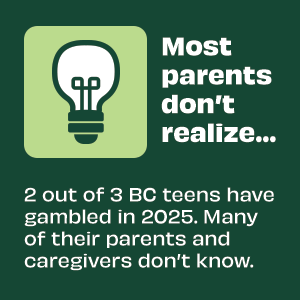
Infographic that states, "2 out of 3 BC teens have gambled in 2025"

Gambling shows up in more places than many parents realize. They’re seeing sports betting ads on TV and social media. Many of the video games they play include gambling or similar activities. 

Young people are at greater risk of gambling harm and addiction because they are still learning how to make decisions, manage risk and handle pressure. Gambling can feel exciting, but it can also make it harder to stop, especially when someone is chasing a win or trying to win back money they lost.

Understanding these influences can help parents have conversations that make a difference – and support healthier decision-making. 

>

Youth may encounter gambling in a variety of everyday spaces:

Icon of various sport balls

Sports betting culture

Sports betting can be part of the sports content youth watch and follow. This may include sports broadcasts, odds integrated into games and commentary, sports analysis shows, and discussions about fantasy sports pools.

Icon showing three people

Social media influencers

Gambling-related content can appear on social media through advertisements, celebrity endorsements, influencer partnerships, and content created by gambling personalities. This can increase the visibility of gambling in youth’s social media feeds.

Icon of a laptop showing online gambling

Video games

Some video games include gambling-like features that can make gambling feel like a familiar part of entertainment. Loot boxes are virtual items that can be purchased or earned in a game and contain random rewards. Players don't know what they'll receive until the loot box is opened. Skin betting involves using virtual in-game items, often called "skins," as currency to place bets on the outcome of games, esports matches, or other events, typically through third-party websites.

>

Image of a youth looking at phone

Look out for changes that may indicate gambling harms:

  • Secretive behaviour: hiding activities, lying about where they've been, or what they're spending money on.
  • Mood changes: irritability, withdrawal, or extreme excitement, often tied to winning or losing.
  • Neglecting school, friends, or hobbies: dropping grades or losing interest in other activities.
  • Constantly thinking about gambling or gaming: talking about it, thinking about it, or planning the next time they gamble or game.

>

Icon to getting support

1. Getting Started

Start by asking open-ended questions and listening without judgment.

  • Try saying: “In that game on your phone, you pay money (and/or credits) but don't know what you'll get back. Do you think that's fair?“

Teens can get defensive talking about themselves. Try asking about their friends. 

  • Try saying: “Do your friends ever make bets? What do you think about that?”
Icon of a book on how it works

2. Share the facts

  1. Gambling is not a reliable way to make money: Games are designed to give the house an edge. Most people lose money over time.
  2. People talk about their wins, not their losses: It may seem like the people you know are winning a lot. Keep in mind that people are more likely to share their wins than their losses.
  3. Your chances don’t improve by playing more: A losing streak absolutely does NOT mean you’re due for a win. For example, opening 10 loot boxes in a row without a rare drop doesn't make the 11th any more likely to pay out.
  4. You can experience harms related to gambling: Players experience a ‘rush’. Over time, some feel the need to gamble more to feel that same ‘high’.
  5. Lots of popular online games include gambling: Gambling isn’t just casino games and sports betting. Look out for any games online that involve spending real or in-game money to win random prizes.

3. Closing the conversation

Tip
Try Saying...
Praise them for talking and show you understood them. "It means a lot that you feel like you can talk to me about this. I’m hearing that when your friends are betting, you feel pressure to join in."
Help them prepare to someone asking them to gamble with “if-then” plans.  If your friends start betting on a game, then tell them you’re just going to watch because you’re saving up at the moment.”
Consider setting a simple household rule. They gamble less when there’s a clear family norm.  "In our house, we don't use real money on games, apps, or bets. If you're ever unsure whether something counts, just ask me."
Remind them you’re there to support them.  "Let's check in again in a few weeks and if you feel pressured to gamble in the meantime, come talk to me. We’ll handle it together.”


Frequently Asked Questions

>

GameSense Advisors are here to provide education, support and referral to gambling resources. Call BCLC’s Customer Support Centre toll-free at 1-866-815-0222 or visit a GameSense Info Centre in casinos.

>

Gambling can show up in games, apps, sports and online spaces such as social media.

>

  • Secretive behaviour: becoming less open about how they spend their time or money or avoiding conversations about gambling or gaming.
  • Mood changes: noticeable shifts in mood, such as irritability, withdrawal, or heightened excitement, especially after wins or losses.
  • Neglecting school, friends, or hobbies: spending less time on activities they used to enjoy or having school performance begin to slip.
  • Constant focus on gambling or gaming: frequently talking about gambling or gaming, thinking about it, or planning when they'll do it next

>

The legal gambling age in British Columbia is 19 years old.

>

Lots of games allow or even encourage youth to gamble with real or in-game money. Loot boxes (which uses in-game or real money for a chance to win random prizes) and skin betting (which use virtual items of value (called ‘skins’) from video games to place bets on third-party websites) are two examples of gambling.